



Bassett Creek Erosion Control & Riverbank Improvements
Bassett Creek has been through a lot. Originally a clean ribbon of water connecting Medicine Lake to the Mississippi, in 1908 the creek had become so polluted the government decided to bury 1.7 miles of it in a tunnel beneath downtown Minneapolis.
Today, over 150 years of urban development have left much of the watershed covered by concrete, roads, rooftops, and parking lots. Because of that, unnatural amounts of water rush into the creek during storms, which means more erosion eating away at whatever exposed soil is left.
If you own part of the remaining natural banks of Bassett Creek, it can feel like you’re paying the price for long-ago haphazard urban development.
The good news is you don’t have to sit back and watch your riverbank vanish. Since 1996, Lakeshore Guys® has helped property owners throughout Minnesota protect their waterfront land, no matter how challenging.
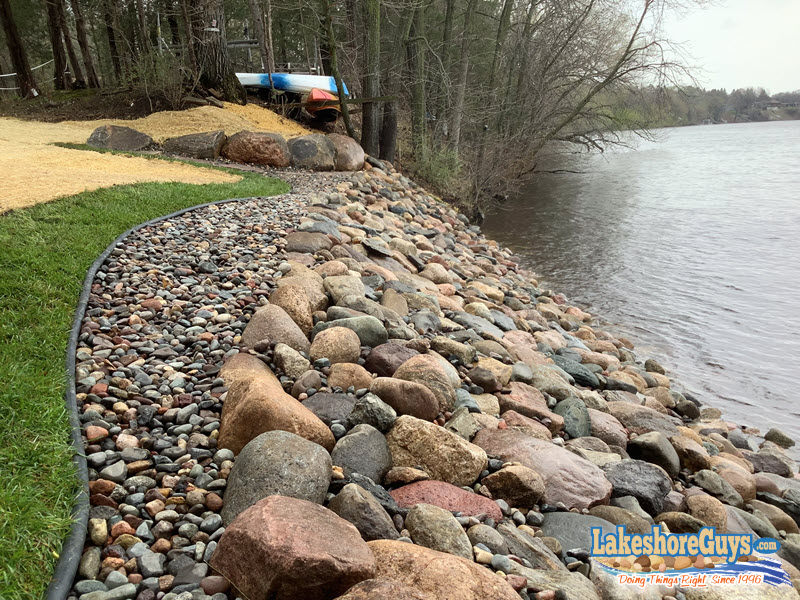
With our riprap installation for erosion control and reinforcements to resist burrowing animals, we can halt the damage now and protect your property long term. Beyond that, our custom staircases and steps provide safe, attractive access so you can fully enjoy your part of Bassett Creek. It’s a beautiful place, and your property can be part of the resurrection.
Tell us about your situation and book an on-site consultation, or read on to learn more.
About Bassett Creek
Bassett Creek travels 12 miles from Medicine Lake through Golden Valley, Crystal, and Minneapolis before reaching the Mississippi.
Previously referred to as “Falls Creek,” its current name comes from Joel Bean Bassett, a New Hampshire settler who arrived in 1852 and built one of the area’s first sawmills.
Bassett became Hennepin County’s first judge of probate and later served on the Minneapolis city council. When the city began developing the North Loop in 1856, he sold much of his land for industrial development, contributing to the creek’s transformation from wilderness waterway to industrial corridor.
In downtown Minneapolis, the final 1.7 miles of Bassett Creek flow through an underground tunnel, built between 1908 and 1923 to help control flooding and hide what had become a heavily polluted waterway. The tunnel runs beneath Target Field’s third-base stands, under the North Loop, and emerges below the Mississippi’s surface near the Stone Arch Bridge.
Today, the creek’s open sections flow through residential backyards, city parks, and golf courses in the western suburbs. In Theodore Wirth Regional Park, the creek winds through seven man-made lagoons built by the Civilian Conservation Corps in the 1930s to create recreational fishing areas and help manage flooding.
Though factories no longer dump industrial waste into the water, property owners along Bassett Creek’s open sections face the ongoing challenge of protecting their land from the water’s persistent erosive forces.
Common Creek Problems
Several factors make problems along Bassett Creek’s banks particularly challenging:
The creek experiences dramatic flow variations, with rapid surges during storms that destabilize soil and accelerate erosion. Modern development has made this worse, as highway runoff from Interstate 94 and 394 drain directly into the waterway.
Over 150 years of urbanization have devastated the watershed. Wetlands that once absorbed floodwaters were buried under 10 to 15 feet of construction fill. Impervious surfaces like concrete, asphalt, roofs now dominate the landscape, forcing water to rush into the creek rather than soaking into the ground.
The creek has been extensively straightened and channeled since the 1800s. Modifications disconnected it from natural floodplains, and with fewer places for water to spread out, erosive pressure on remaining banks intensified.
All of this means homeowners often feel like they’re fighting an endless battle against the creek.
Stop Erosion Now
Riprap is a type of durable stone used for erosion control. Our riprap installations layer these stones over geotextile filter fabric, providing attractive and reliable protection for banks on Bassett Creek.
Flowing water will find and exploit any weaknesses, which is why creek restoration requires specialized expertise. We can build up your property’s bank to handle the creek’s variable flows and erosive forces.
Our banks are designed for long-lasting protection, giving you the peace of mind that your bank is built to withstand the creek’s droughts, floods, and everything in between.
Keep Burrowing Animals Out
Burrowing animals like muskrats, groundhogs, or even beavers can damage banks. If you’re dealing with this issue, we can help.
Our proprietary 72″ PVC-coated galvanized steel Muskrat Mesh™ is designed to deter burrowing animals. This mesh covers several feet of your bank above water, as well as extending into the water a few more feet, which helps prevent animals from being able to dig into the ground at, above, and below the water’s edge.
Combined with geotextile fabric and a layer of stones, this creates a hardened area that animals can paw at, but it’s much easier for them to move on and find someplace else to dig.
Staircases and Steps
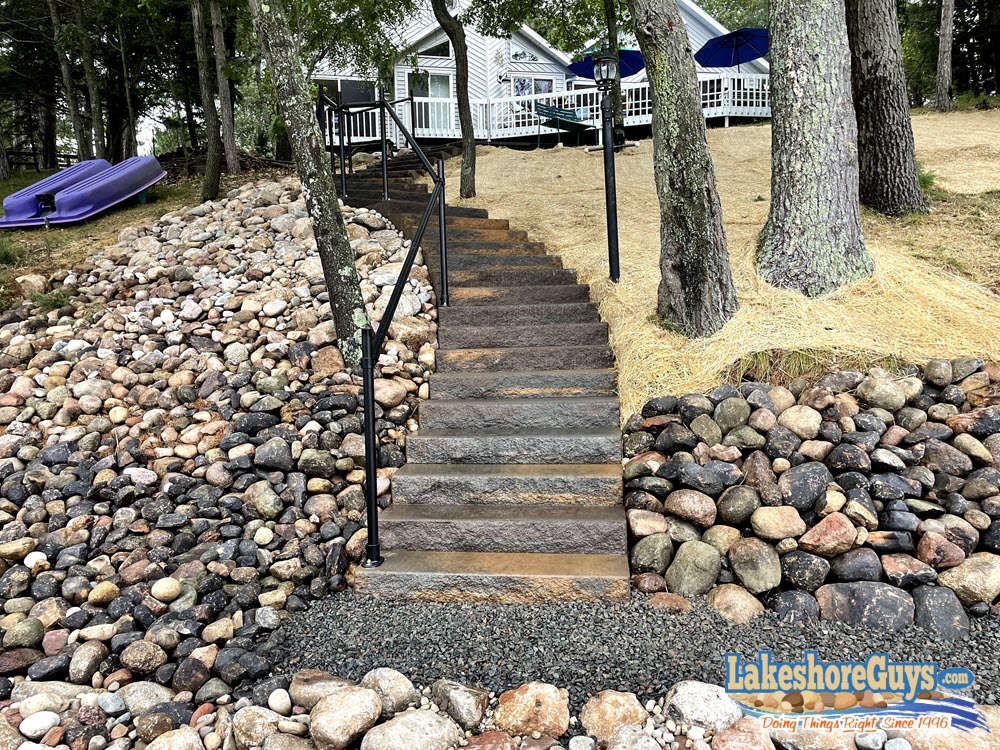
Whether you want to reach the creek for paddling, enjoying the scenery, or simply having convenient access to your waterfront, we can build you a safe, attractive access point that complements your riprap creek bank.
Our custom-designed staircases and steps work with Bassett Creek’s variable water levels and provide long-lasting access in your choice of materials:
Once you can safely reach the creek, you might discover you want additional amenities like a patio overlooking the water or an improved pathway along your property. We can handle that, too.
Clearer Waters Ahead
Despite its troubled past, Bassett Creek is getting better. The Bassett Creek Watershed Management Commission has spent millions on restoration projects like stabilizing eroding banks, removing accumulated sediment and pollutants, and improving water quality throughout the watershed.
Sweeney Lake, one of Bassett Creek’s tributaries, was removed from the State Impaired Waters List in 2024 after successful restoration efforts.
More projects are planned through 2026 and beyond. Bassett Creek is getting cleaner, healthier, and more usable. Protecting your property now means you’ll be ready to enjoy the creek’s ongoing restoration for years to come.
Get Your Piece of Bassett Creek Protected
If you’re ready to stop watching your property wash downstream and start enjoying your connection to this storied Minnesota waterway, we’re here to help. Our DNR-compliant practices, in-depth explanations of our processes, photos, videos, and great reviews make your next step a clear and easy one.